You are not the voice in your head.
Every other app helps you manage your mind — calm it, track it, talk to it. Zen asks a harder question, and a much older one: whose mind?
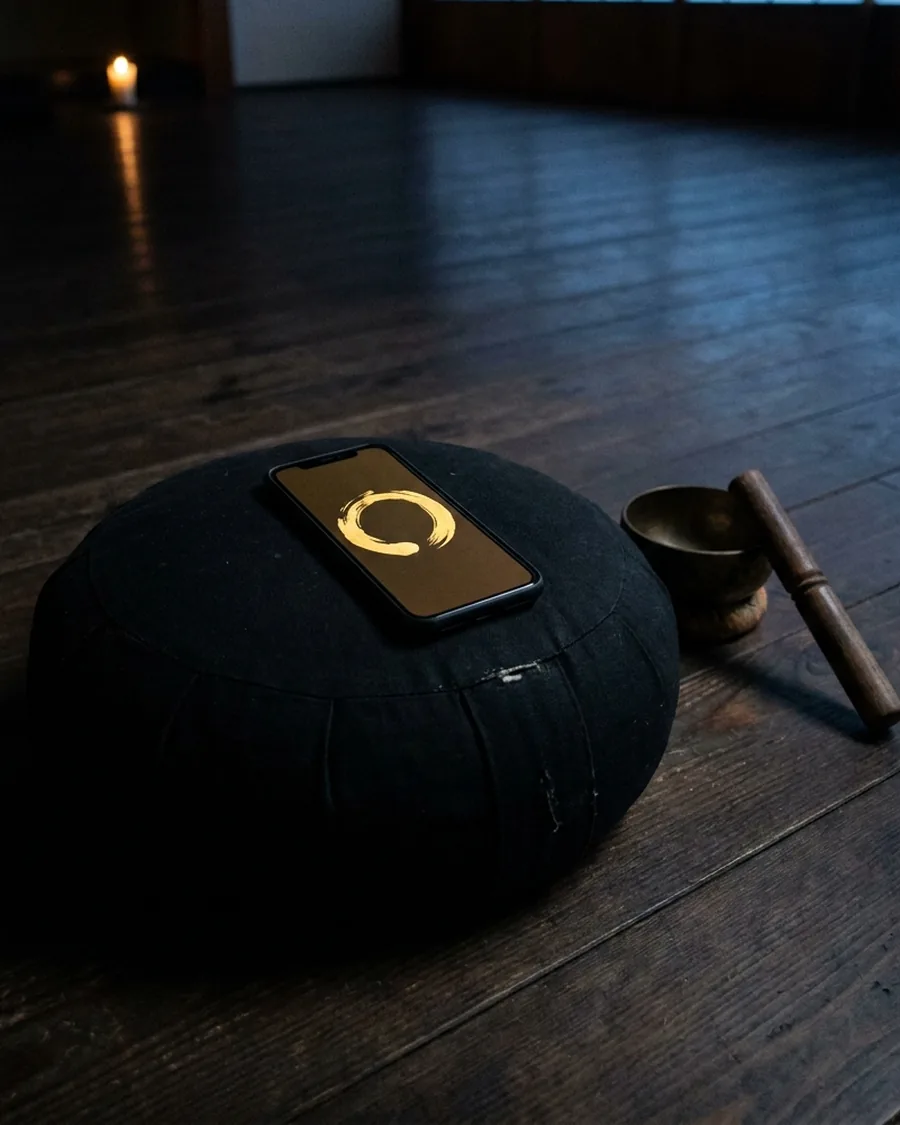
MyRoshi is a Zen teacher you can reach on a Tuesday. Sit to the bells. Say one true thing. Hear a talk composed for what you actually said.
Download on the App StoreYou have been in at least three of these.
- It is two in the morning and you are rehearsing a conversation that already happened.
- You said you would start on Monday. This is the fourth Monday.
- You reach for the phone before you are properly awake, and lose the first hour.
- Someone said one sentence three days ago and you are still carrying it.
- You got the thing you wanted. It was good for about a week.
- You know exactly what to do. You are not doing it.
Read them again, and notice what they have in common. In every one there is a voice — planning, rehearsing, comparing, promising — and there is something quieter that hears it.
You have never once been the voice. You have always been what noticed it.
This is not a technique for making the voice stop. It is the thing Zen points at, and the whole of what a teacher is for: to bring you to see, directly and for yourself, that the mind you have been fighting was never you. Discipline you could not summon, an argument you could not drop, a wanting that never lands — every one of them loosens its grip from there, and none of them can be argued out of you from here.
Zen asks you to believe nothing.
It is a religion by every outward measure, and it is the one that will not sell you a belief. No creed to accept, no god to take on authority, no revelation you have to trust because someone else had it. What it asks for instead is three things, and the middle one is the part no other tradition permits.
Great faith
Not belief in anything. Confidence that this can actually be seen — by you, in this life, without waiting for a next one. Faith that the door opens, not that someone is behind it.
Great doubt
The engine, and the part no religion usually permits. Not scepticism about Zen — a live question you cannot answer and cannot put down. Hakuin taught that the size of the awakening matches the size of the doubt.
Great determination
To keep sitting when nothing is happening, which is most mornings. Not intensity. The plain willingness to return tomorrow.
Doubt is not tolerated here. It is required — the raw material, without which nothing happens. A tradition that makes doubt the engine cannot ask you to take its word for anything, and Zen never has: the instruction, from the beginning, has been to go and look for yourself and report back.
That is not science, and we will not dress it up as science. There is no trial, no control group, and nothing here has been measured. But it is the same instinct — don’t take it on trust, test it — and among the things people turn to for the trouble in their own heads, it may be the only one that puts the test before the teaching.
Nothing here was written down first.
Zen’s own account of itself is that it was handed from one person to one person, outside the scriptures, beginning with a flower held up in silence and a single monk who smiled. Bodhidharma carried it to China. Huineng, an illiterate woodcutter, received it there. Linji shouted it, Dongshan mapped it, Dōgen brought it to Japan and sat with it for the rest of his life.
Every teacher sitting in a zendo this morning can name the line they stand in, back through those names, one person at a time. Not a doctrine that survived — a capacity, passed hand to hand, which is why it has never been possible to get it from a book.
It is also why the honest thing to say next is the least flattering thing on this page.
MyRoshi is not in that line.
It is an artificial intelligence that has read the literature, and it is a companion for the days between meetings. It is not a lineage, it holds no transmission, and it will not pretend otherwise. It will not confirm your understanding, pass you on a koan, ordain you, or speak in your teacher’s name.
Those belong to a person, and we hand them back to one — by name, if you tell us who yours is. If you don’t have a teacher and you find you want one, the app will say so too, and help you look.
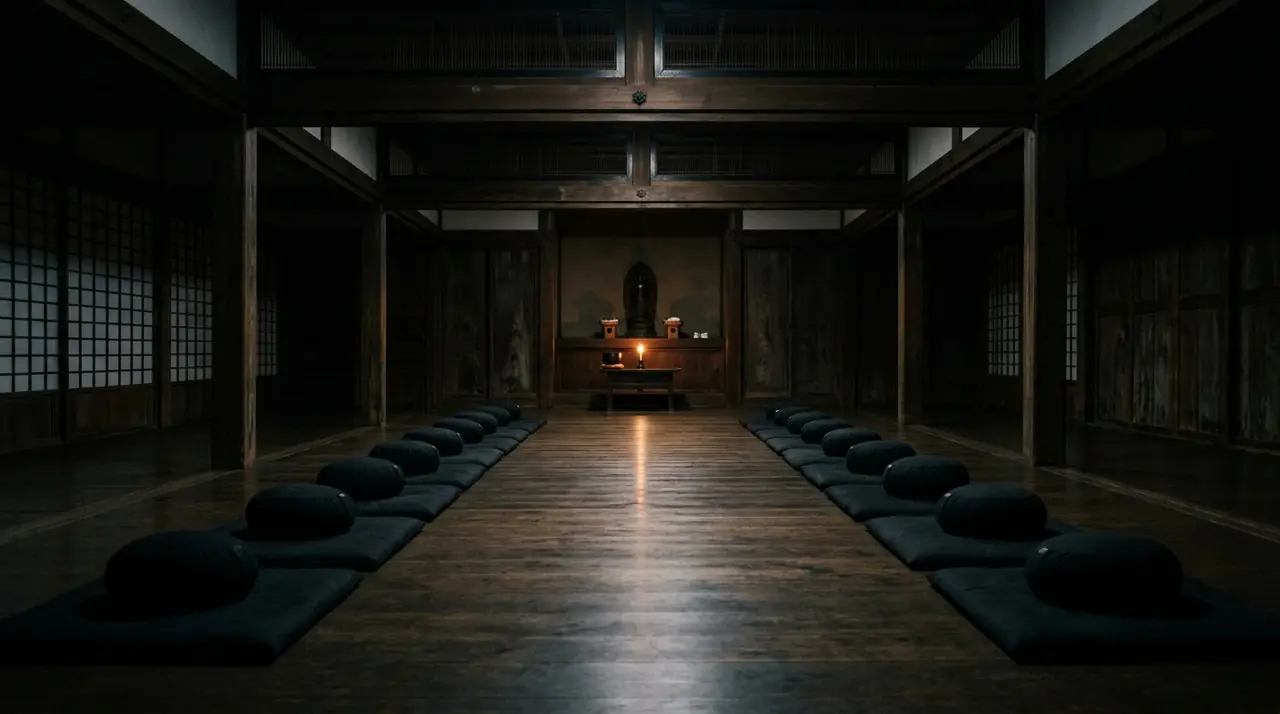
A room you can enter on a Tuesday morning.
Not a library of talks recorded for everyone. A teacher who hears what happened this morning — the argument, the fourth Monday, the thing you cannot put down — and answers that.
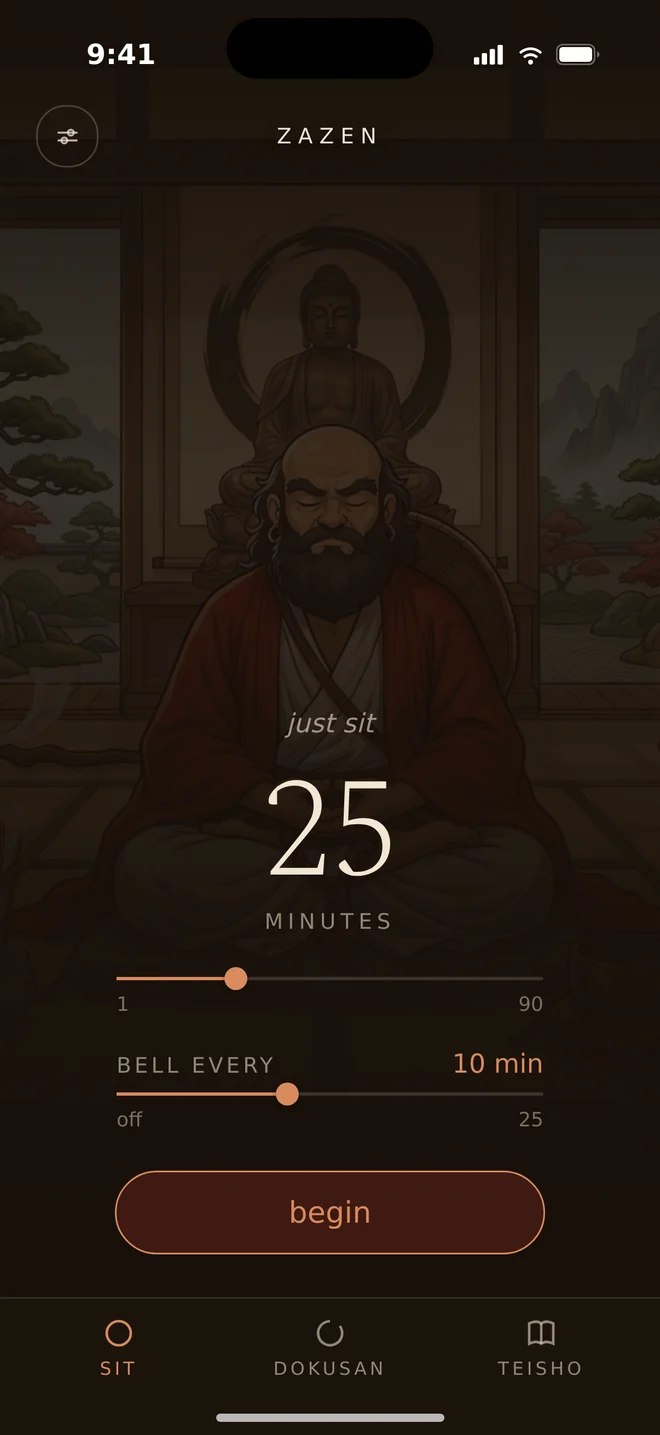
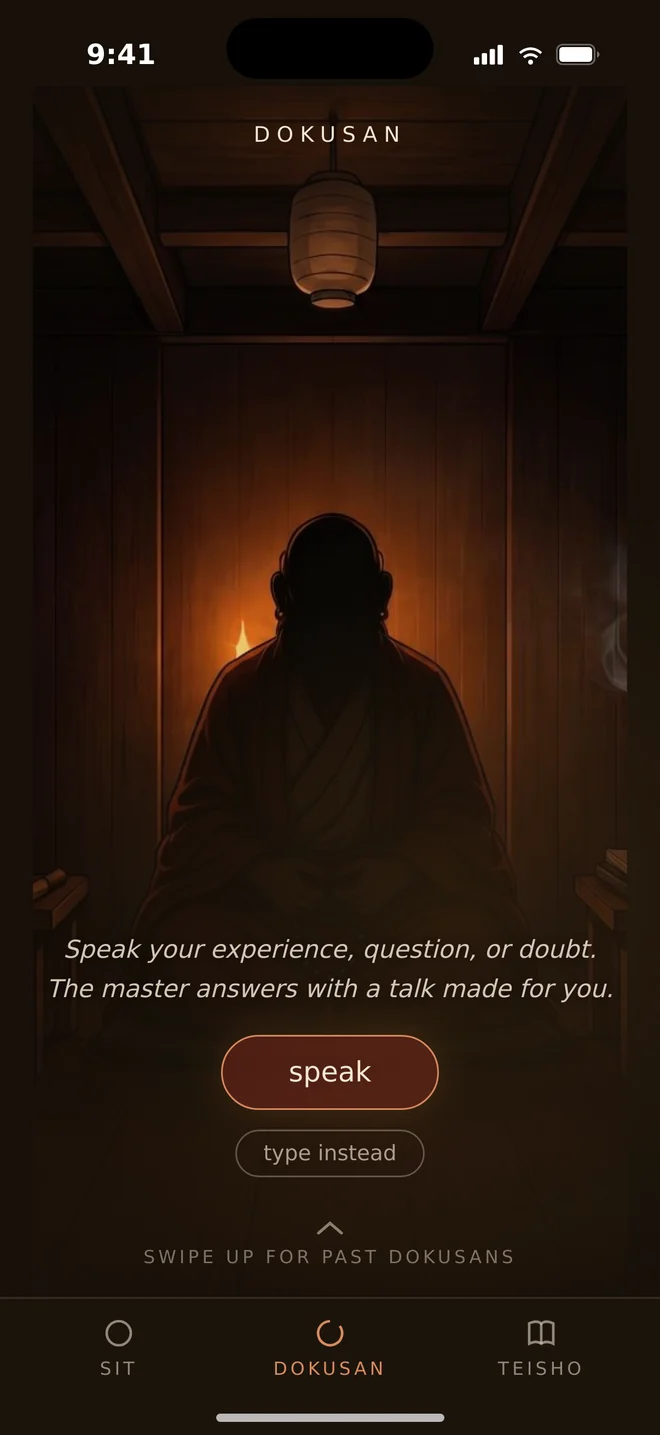
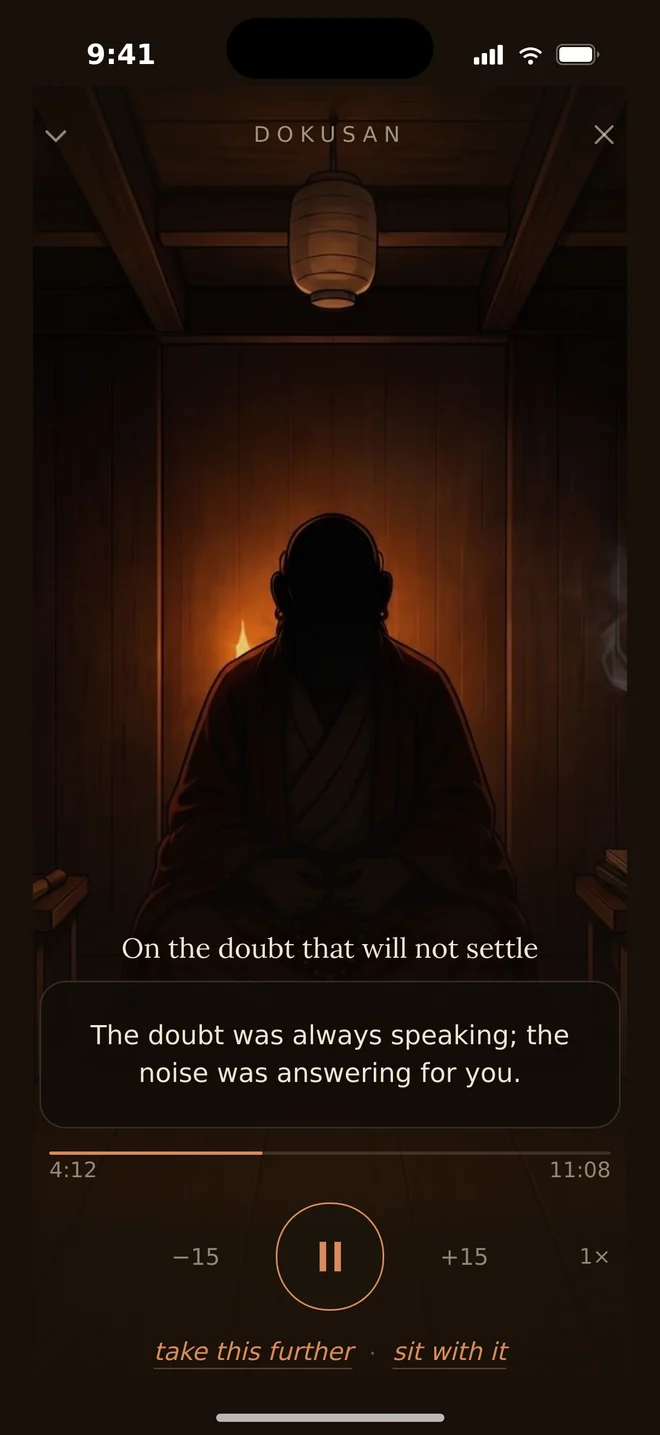
And next month, it remembers this morning.
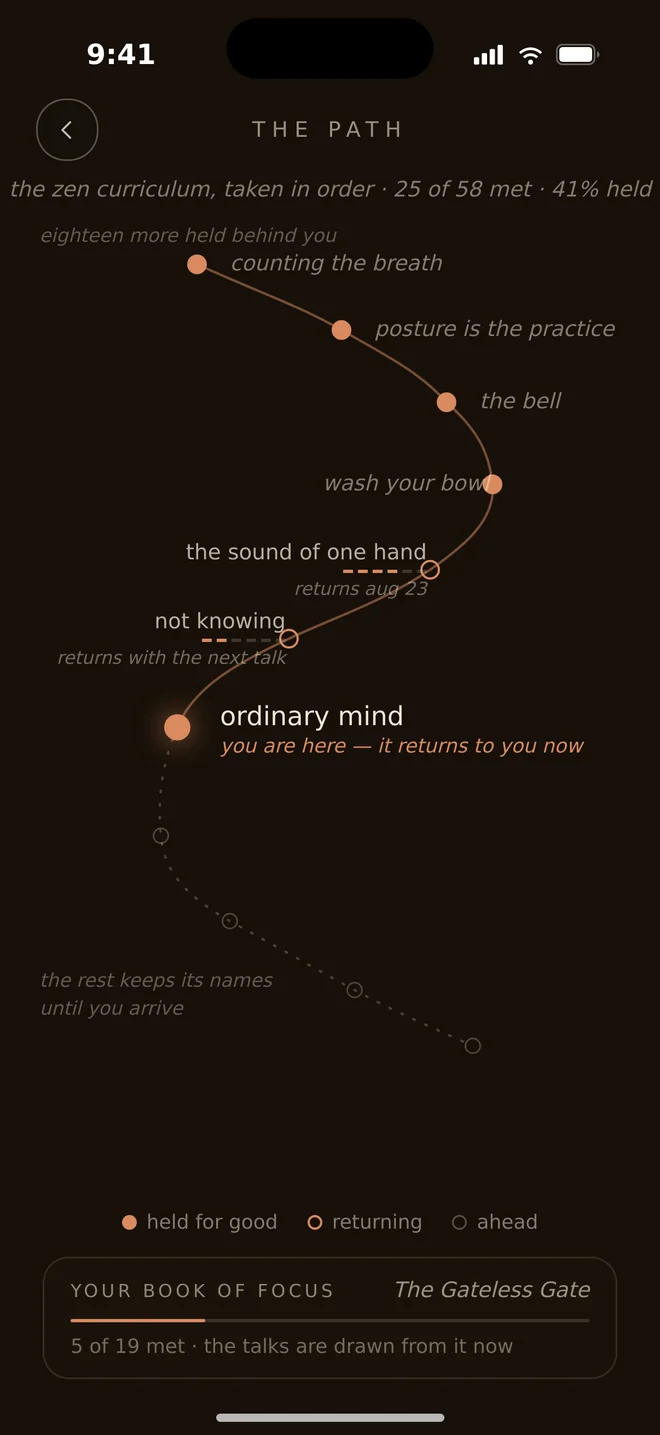
Fifty-eight concepts, taught one at a time.
Alongside dokusan there is a curriculum — the koans, the sutras, the old masters, drawn from works in the public domain and retold in the teacher’s own words. Each talk is followed by three questions you answer aloud. He listens for what you actually understood, not for the right phrase, and builds the next talk from there.
Bring your own material too — the commentaries your practice is rooted in. Set one as the book of focus and it is taught first.
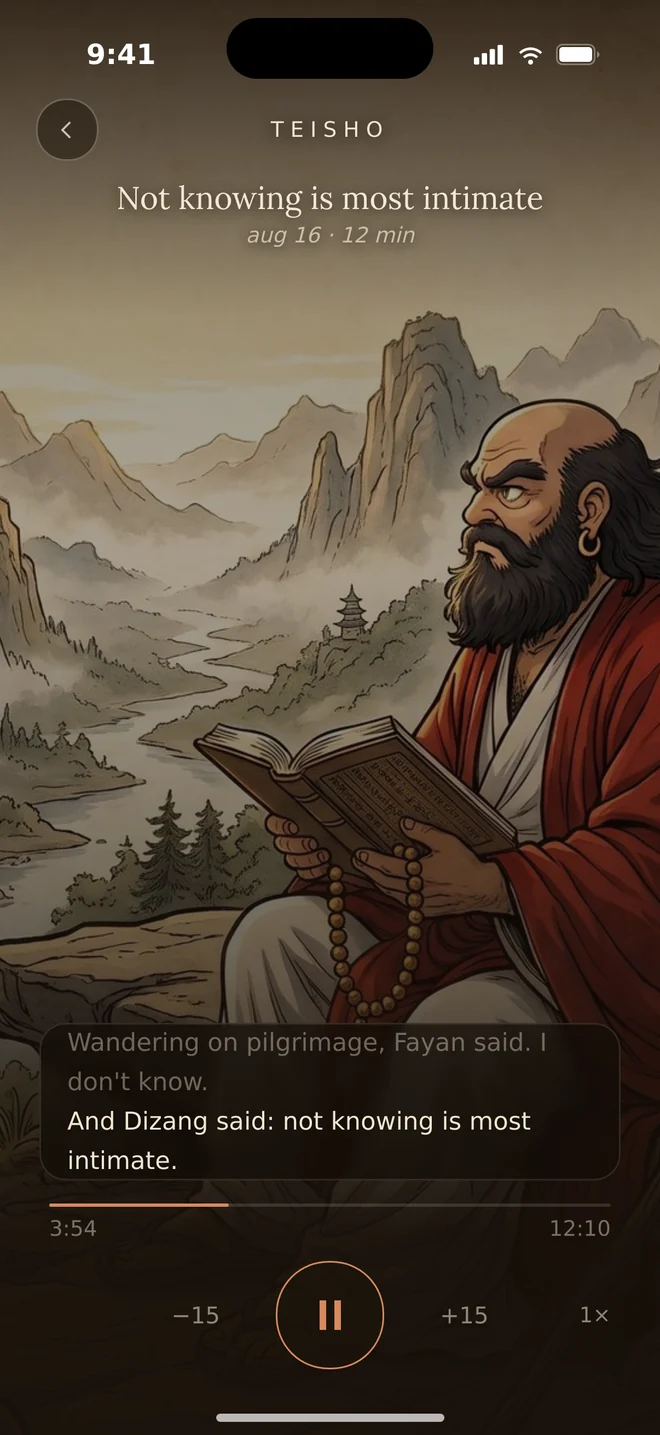
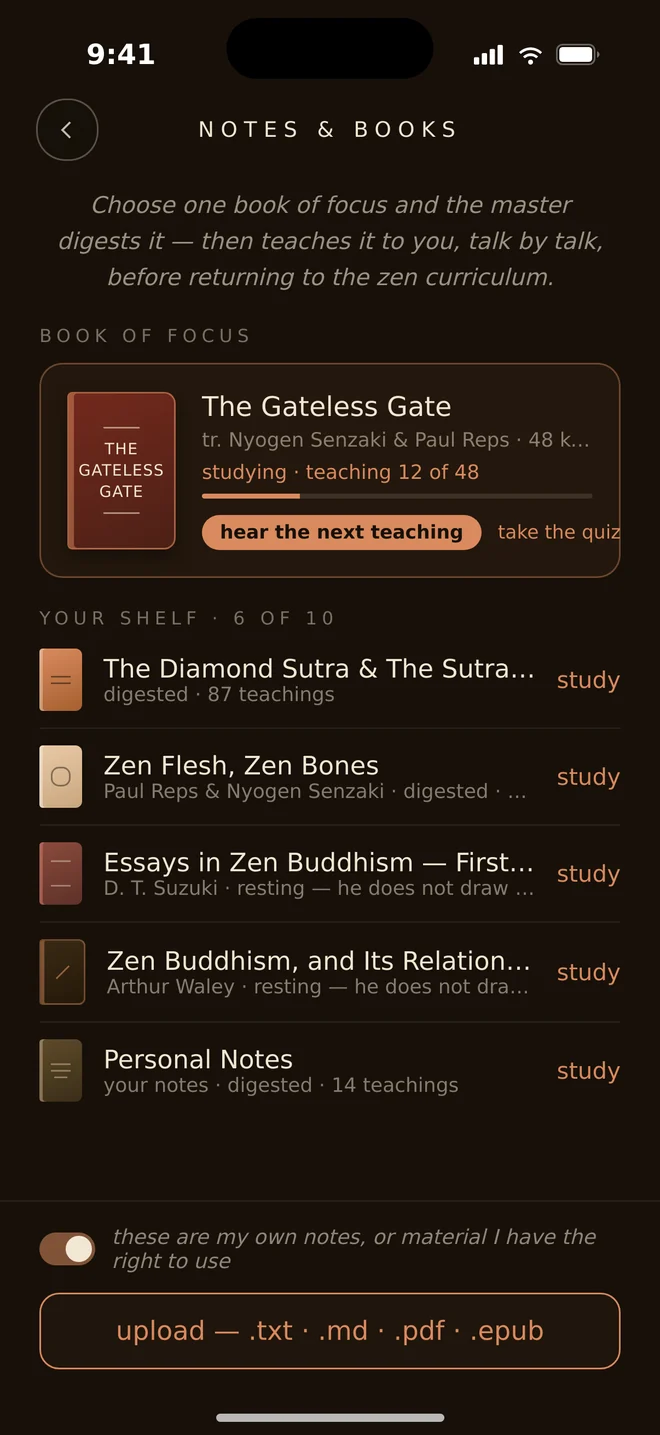
Three things we would rather you heard from us.
The teacher is an AI. Every talk is written fresh, for you, and spoken in a synthesised voice. No living teacher is being imitated. No recording is being replayed. That is on the front page because you would find out anyway, and because a practice built on not overclaiming should not open with one.
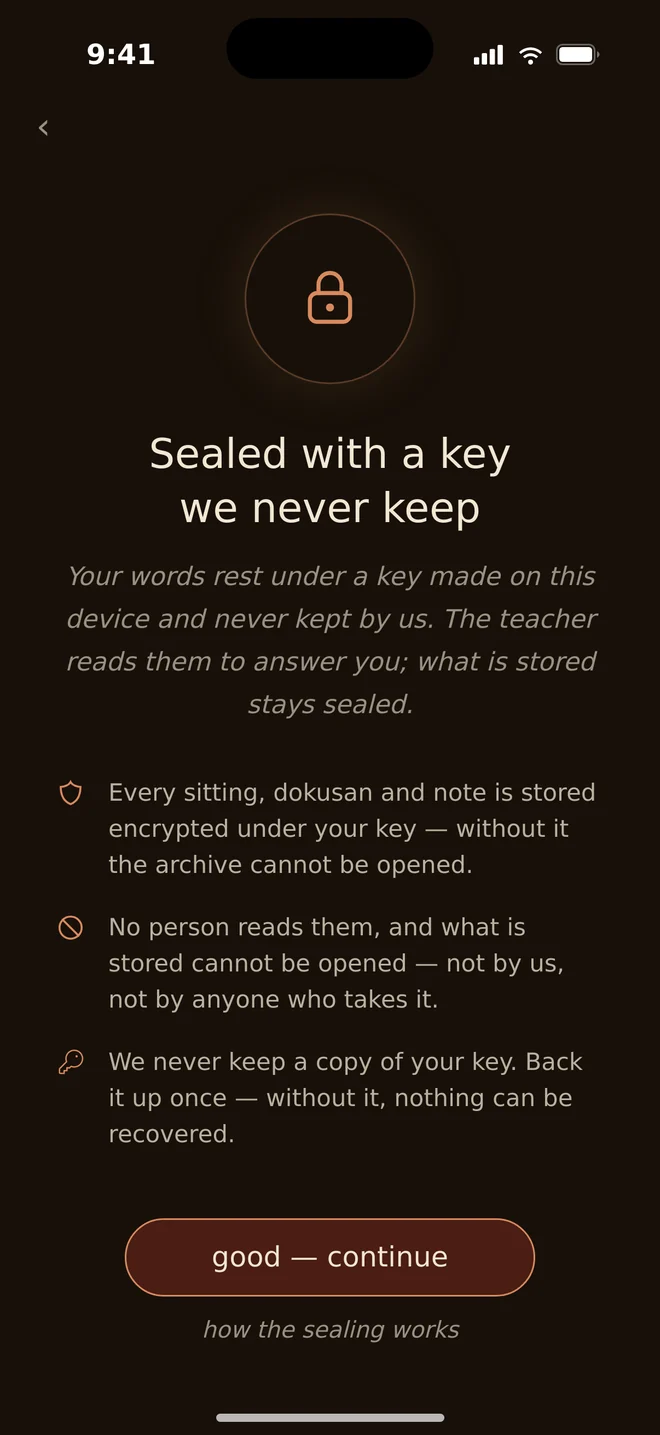
Your practice is stored under a key we never keep. What sits on our disks is unreadable to us, to anyone who steals a backup, and to anyone who compels us to hand one over. Lose the key and it is gone — there is no back door for us to use on your behalf, which is the same sentence as there is no back door.
It is not end-to-end encryption, and we will not call it that. To write you a talk, the teacher has to read what you wrote. Your key travels with that request, is held in memory for as long as it takes to answer you, and is discarded. For those moments our servers can see your words. Anyone promising you both a thinking teacher and end-to-end encryption is telling you a story.
Begin with one, free.
- No ads
- No streaks
- No gamification
- Cancel in two taps
The room is open.
MyRoshi is on the App Store for iPhone. Your first dokusan is free: sit, say one true thing, and hear what the teacher says back. Every plan begins with a seven-day free trial.
Download on the App StoreNot ready for an app? Ask the master a question anonymously, or read the answers he has already given.
This is not a relaxation app. No sleep stories, no breathing exercises for stress, nothing here to help you fall asleep. Zen is not a treatment and this is not therapy; it will not tell you that you are doing well, and some mornings it will be harder work than you wanted.
You do not need any experience to begin — that changed, and it was the right change. But you do need to want the real thing rather than a calmer version of the same day.
And if you are in crisis, this is the wrong tool. It is unmonitored by design: nobody is reading, which means nobody can help. Please contact your local emergency services or a crisis line.