Zen asks you to believe nothing.
It is a religion by every outward measure, and it is the one that will not sell you a belief. Here is what it does ask for instead — and why the middle of the three is the part that should interest a sceptic most.
Nothing here was written down first.
The tradition’s account of its own origin is a story about silence. The Buddha, asked to teach, held up a flower and said nothing. Of everyone present only Mahākāśyapa smiled, and that — not a doctrine, not a text — is what was said to have passed between them.
Whether it happened is beside the point of why it is told. It is a claim about the kind of thing being transmitted: not information, which can be written down and posted, but a capacity, which has to be handed over in person, because the handing over is most of what it is.
Bodhidharma is said to have carried it from India to China in the fifth century and summarised it in four lines that Zen has repeated ever since: a special transmission outside the scriptures; not founded on words and letters; pointing directly at the human mind; seeing into one’s own nature.
After him the line runs through people rather than books. Huineng, an illiterate woodcutter, receives it in the seventh century and the tradition never quite recovers from the implication. Linji shouts and strikes and speaks of a true person of no rank. Dōgen brings it to Japan in the thirteenth century and spends the rest of his life insisting that the sitting is the awakening, not a method for getting one. Hakuin nearly destroys himself on a koan and comes back to rebuild the Rinzai school around what it cost him.
Every teacher sitting in a zendo this morning can name the line they stand in, back through those names, one person at a time. It is the longest continuously operating apprenticeship in anything that human beings do.
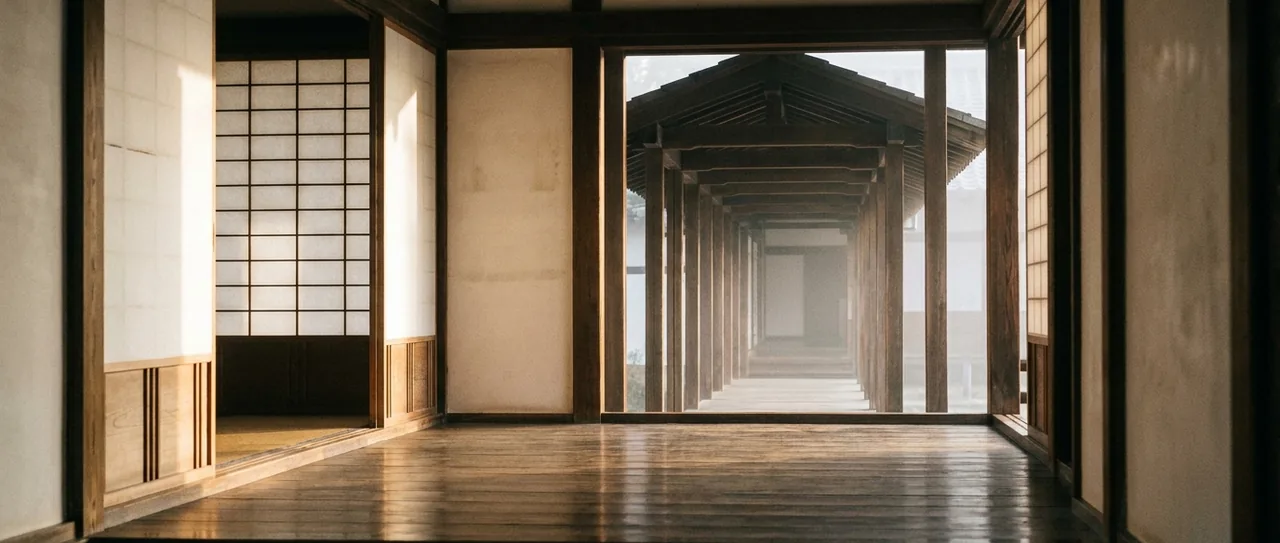
Three things, and no creed among them.
There is no article of faith to sign, no god you are required to accept, no revelation you must take on someone else’s authority. Zen’s three requirements are older than any of that and are usually given in this order.
Great faith
The word misleads. This is not faith that something is true — there is no proposition here to assent to. It is closer to the confidence a person needs to start digging: that there is water, that the ground will give, that this is not a waste of a life.
Specifically: faith that what the old teachers saw can be seen by you, in this life, in an ordinary body, without special talent and without waiting for a next one. Faith that the door opens — not that someone is standing behind it.
Great doubt
The engine, and the part almost no religion permits. Not scepticism about Zen, and not intellectual hesitation — a live question lodged where you cannot reach it, which you can neither answer nor put down.
Hakuin, who nearly broke himself on it in the eighteenth century, put the relationship plainly: at the bottom of great doubt is great awakening, and a small doubt gets you a small one. The koan exists to manufacture this condition on purpose — not a riddle with a clever answer, but a question built to defeat the part of you that answers.
Great determination
Usually translated as fierce resolve, which makes it sound louder than it is. In practice it is the willingness to sit again tomorrow when nothing at all happened today, and nothing happened the day before that, and you have begun to suspect nothing ever will.
Most mornings of most practices are this. It is not intensity. It is the plain refusal to stop.
Doubt is not tolerated here. It is required.
Consider how unusual that is. In most traditions doubt is the thing to be overcome — a weakness, a test, at worst a sin. In Zen it is the raw material. Without it nothing happens; the practice is understood to be stalled, and a teacher will work to manufacture more of it in you rather than less.
A tradition built that way has forfeited the right to ask you to take its word for anything, and to its credit it never has. The instruction from the beginning has been the same: go and look for yourself, and come back and say what you found. Then someone who has looked will tell you, usually unhelpfully, whether you have looked yet.
This is not science and we will not dress it up as science. There is no trial here, no control group, no measurement, and no claim that sitting will do anything in particular to you. An app that starts citing studies about meditation and cortisol is changing the subject, usually because it is selling relaxation and would rather you did not notice.
But it is the same instinct — don’t take it on trust; test it — and among the things a person can turn to for the trouble in their own head, it is one of the very few that puts the test before the teaching and stakes everything on what you find.
You are not the mind. You are not the body.
Every school of Zen, however they differ on method, is pointing at one thing, and it is not a belief about the universe. It is a case of mistaken identity — so ordinary, so continuous, and so early that it has never once been examined.
You take yourself to be the voice that thinks. You take yourself to be the body that ages and the moods that pass through it. Watch for ten minutes and the arithmetic stops working: the thoughts arrive on their own, unasked, and leave without permission; the moods change while you stay; the body is something you are aware of. Whatever is doing the noticing is not among the things noticed.
Huang Po, in the ninth century, spent his teaching life on this one point and refused to soften it: there is nothing to attain, and the seeking is the obstruction. Dōgen put it as a sequence — to study the way is to study the self, and to study the self is to forget the self. Bankei called it the Unborn and said, plainly, that it had never been absent for a moment and no one had ever needed to produce it. Sengcan opened his inscription on faith in mind by observing that the great way is not difficult for those who have no preferences.
None of them is asking you to agree. All of them are describing something they claim is already the case, and daring you to check.
And what it will not promise.
Zen does not promise to make you calm, productive, successful or well. Dōgen’s instruction is to sit without a gaining idea, which means: without holding the practice hostage to a result. The moment sitting becomes a method for getting something, it has quietly become one more errand for the voice in your head — which is the thing being examined.
This is inconvenient for anyone trying to sell it, ourselves included. It is also the reason the tradition has lasted fifteen hundred years while every generation’s self-improvement industry has not.
MyRoshi is not in that line.
It is an artificial intelligence that has read the literature, and a companion for the days between meetings with a person. It holds no transmission. It will not confirm your understanding, pass you on a koan, ordain you, or speak in your teacher’s name — those belong to a human being, and the app hands them back to one.
What it can do is be there on a Tuesday, listen to what actually happened, and answer it out of a tradition that has been answering it for a very long time.
Read the tradition itself — sixteen guides, free, no account →